- The Camping Family Home
- Camping Gear
- Tents
- The Best Tree Tents for Camping
Helping campers since 2011
The Best Tree Tents
For Camping
Which are the best tree tents for camping? Find out why a suspended tree tent setup can work better than ground camping!
Let's be real — if you've ever spent a night on rocky, lumpy, or soaking-wet ground, you already know the feeling. You wake up stiff, damp, and wondering why you didn't just stay home.
That's exactly where a tree tent changes everything. A suspended tree tent lifts you completely off the ground, which means no more rocks poking you in the back, no pooling rainwater sneaking under your groundsheet, and no creepy crawlies making their way into your sleeping space.
It's one of those upgrades that, once you try it, makes regular ground camping feel like you've been doing it wrong the whole time.
KingCamp Camping Equipment
BIG SALE!
Check out the current sale at KingCamp! Up to 40% off high-quality camping gear, tents, chairs, sleeping equipment, camping kitchens and more....all your outdoor essentials!
Click here to find your bargains!


The Best Tree Tents For Camping
The advantages of sleeping suspended include better airflow underneath you, which helps regulate your body temperature — especially on warm summer nights when the ground holds heat and makes sleeping miserable.
There's also something deeply satisfying about drifting off to sleep while gently swaying between the trees. It feels like camping is supposed to feel — wild, free, and a little bit magical.
That said, a tree tent isn't just a hammock with a fancy name. The best tree tents for camping are purpose-built shelters that combine the suspension of a hammock with the full weather protection of a tent.
They come with rainflies, bug nets, and structural poles that keep the sleeping area flat and spacious — a huge improvement over the banana-shaped sag you get in a regular hammock.
Whether you're looking at a hanging tree tent for camping with your family or a solo ultralight setup for a backpacking trip, there's a tree tent out there that fits your needs perfectly.
The Best Tree Tents For Camping
What Actually Matters when choosing a tree tent?
Not all tree tents are the same, and buying the wrong one can leave you frustrated before you even get to the campsite. Here are the key things you really need to think about before you pull out your wallet:
- Capacity: Tree tents range from solo 1-person models all the way up to 3-person family-sized setups. Think about who you're camping with and whether you want your own space or want to share.
- Weight: If you're backpacking to your campsite, weight matters a lot. Some tree tents weigh as little as 2 lbs, while larger models can top 20+ lbs. Know your situation before you buy.
- Setup difficulty: Some tree tents can be set up in 15 minutes once you know what you're doing. Others have a steep learning curve. Look for models with clear instructions and ratchet strap systems that make tensioning easy.
- Weather protection: Check the waterproof rating (measured in hydrostatic head — HH). A rating of 3,000mm HH or above is solid for most camping conditions. The best models go up to 5,000mm or higher.
- Tree spacing requirements: Most suspended tree tents need trees that are between 8 and 15 feet apart. Always check the manufacturer's specs so you're not stuck at a campsite with no suitable trees.
- Load capacity: This is non-negotiable for safety. Make sure the tent's weight limit comfortably exceeds the combined weight of everyone sleeping in it, plus gear.
- Insect protection: A built-in bug net is a must if you're camping anywhere with mosquitoes, which is basically everywhere in summer.
Beyond those basics, think about the material quality. Look for ripstop nylon or polyester fabrics with UV resistance ratings — the sun degrades fabric over time, and a good tree tent should last you years of adventures.
Also consider the strap system. Ratchet straps are far easier to tension correctly than simple rope systems, and wider straps (at least 1 inch) are better for tree health.
Some manufacturers even include tree-friendly webbing straps that distribute pressure across a wider area of bark, which is a nice touch if you care about leaving no trace.

The Best Tree Tents For Camping
Who a tree tent is NOT for:
Tree tents are not for everyone, and it's better to know that upfront than to spend hundreds of dollars on something that doesn't suit you.
First, if you camp in open desert, alpine meadows, or any environment without trees, a tree tent is basically useless. You need suitable trees — ideally healthy, living trees at least 8 inches in diameter — within the right spacing for your specific tent. If your favorite camping spots are treeless, stick to a traditional ground tent.
Second, tree tents are not the best choice if you have mobility issues or find it difficult to climb in and out of a suspended shelter. Getting into a tree tent requires a bit of athleticism — you're essentially climbing up and swinging yourself into a suspended platform.
Most models have a floor hatch or side doors, but it's still more work than just unzipping a ground tent door and stepping in.
Third, if you're a restless sleeper who tosses and turns a lot, the gentle sway of a suspended tent can feel more like a ship in a storm than a cozy hammock.
Fourth, if you're on a very tight budget, be aware that quality tree tents start at around $200 and can easily exceed $800 for premium models. They're an investment — but one that pays off in comfort and experience.
The Best Tree Tents For Camping
Get a 10% discount!
NB:
HOW TO GET UP TO 10% DISCOUNT ON TENTSILE PRODUCTS:
** Just click on our links below to go directly to the Tentsile store, and use this discount code to get up to 10% off: AF698868 **
The 7 Best Tree Tents for Camping
Here's a quick rundown of the seven best tree tents for camping so you can get the big picture before we dive into the details:
1. Tentsile Stingray 3-Person Tree Tent — Best for families and groups
2. Tentsile Connect 2-Person Tree Tent — Best all-around 2-person tree tent
3. Tentsile Flite 2-Person Tree Tent — Best for backpackers who want a true tree tent
4. Tentsile UNA 1-Person Hammock Tent — Best solo tree tent
5. Kammok Mantis UL All-in-One Hammock Tent — Best ultralight hammock tent
6. Lawson Blue Ridge Camping Hammock — Best budget-friendly hammock tent
7. Grand Trunk Skeeter Beeter Pro — Best entry-level hammock with bug protection
Each of these picks has been chosen based on real-world performance, user reviews, build quality, and value for money. Whether you're a solo adventurer or camping with the whole family, there's something on this list for you.
1. Tentsile Stingray 3-Person Tree Tent (3.0) — Best for Families

If you want the full tree tent experience for the whole crew, the Tentsile Stingray is the gold standard. This is a massive, 3-person suspended tree tent that anchors to three trees in a triangular formation, creating a stable, flat sleeping platform that's genuinely roomy.
According to Tentsile's official product page, the Stingray 3.0 has an 880 lb / 400 kg weight capacity, a 4-season rating, and a 5,000mm waterproof rainfly — so it can handle serious weather. It weighs in at 24.4 lbs and packs down to 25.5 x 8.6 x 11.8 inches, which makes it a car camping or canoe-in kind of tent rather than a backpacking option.
GearJunkie described it as "complicated looking but easy to set up and fun for anyone who entered," and noted that the 20-foot ratchet straps make tensioning the tent straightforward once you get the hang of it. At around $849, it's a serious investment — but for families who want to sleep together off the ground in real comfort, it's hard to beat.
- ✅ Pros: Massive 880 lb capacity, 4-season rated, 5,000mm waterproof fly, three separate sleeping zones, built-in bug mesh
- ❌ Cons: Heavy (24.4 lbs), expensive (~$849), requires three suitable trees, steep learning curve on first setup.
Go straight to the Tentsile website to get availability and current pricing for the Stingray, and remember to use the discount code AF698868 to get up to 10% off your purchase!
2. Tentsile Connect 2-Person Tree Tent (3.0) — Best All-Around 2-Person Tree Tent
The Tentsile Connect is probably the most popular tree tent in the world, and for good reason. It's the sweet spot between the massive Stingray and the lighter Flite — big enough for two adults to sleep comfortably, with a 880 lb / 440 kg weight capacity that gives you serious peace of mind.
According to the Tentsile website, the Connect 3.0 features three entrance doors, a central floor hatch, built-in insect mesh, and a waterproof rating of 8,000 HH — which is exceptional.
Reviewers at TechGadgetsCanada reported waking up with "no backache and no stiffness" after a night in the Connect — which is the real test of any sleeping system. It's priced at around $599–$629 and weighs approximately 20.8 lbs, so it's best suited for car camping or short carries.
- ✅ Pros: Huge 880 lb capacity, 8,000 HH waterproofing, 3 doors, flat sleeping surface, 4-season rated
- ❌ Cons: Heavy (~20.8 lbs), pricey (~$599+), needs three trees, not ideal for backpacking.
Go straight to the Tentsile website to get availability and current pricing for the Connect, and remember to use the discount code AF698868 to get up to 10% off your purchase!
The Best Tree Tents For Camping
3. Tentsile Flite 2-Person Tree Tent (3.0) — Best for Backpackers

The Tentsile Flite is where the Tentsile lineup starts getting interesting for backpackers. It's the lightest true tree tent in the Tentsile range, weighing in at approximately 7 lbs (3.2 kg) according to OffroadTents.com — a significant drop from the Connect and Stingray.
It still sleeps two people, has a 485 lb load capacity, and comes with aluminum alloy poles, a built-in bug net, and a rainfly. The interior height is about 3 feet (100 cm) when unloaded, giving you enough room to sit up and get dressed without feeling cramped.
At around $429, it's more affordable than the Connect, and the reduced weight makes it a realistic option for hikers who want to carry their tree tent in. The trade-off is a slightly lower capacity and a 3-season rating rather than 4-season.
- ✅ Pros: Lightest Tentsile model (~7 lbs), more affordable (~$429), still sleeps 2, includes bug net and rainfly
- ❌ Cons: 3-season rating, lower capacity than Connect, still requires three trees.
Go straight to the Tentsile website to get availability and current pricing for the Flite, and remember to use the discount code AF698868 to get up to 10% off your purchase!
4. Tentsile UNA 1-Person Hammock Tent (3.0) — Best Solo Tree Tent

The Tentsile UNA is Tentsile's answer for solo campers who want the full tree tent experience without sharing space. According to Tentsile's product page, the UNA 3.0 weighs just 6.2 lbs and packs down to an impressively compact 11 x 8 x 8 inches, making it genuinely backpack-friendly.
It features a built-in zippered bug net, a rainfly, a sleeping pad pocket, and the same triangular three-tree suspension system as the larger Tentsile models.
The UNA is a 3-season tent with a 3-season rating and is priced at around $299–$329. This is Tentsile's smallest, lightest, most packable lay-flat tree tent. It has thoughtful design touches like a sleeping pad pocket and multiple entry points.
It's worth noting that some taller users (over 6'2") have found the sleeping area a bit snug, so if you're on the taller side, the Flite might be a better fit.
- ✅ Pros: Lightweight (6.2 lbs), compact packed size, affordable for a Tentsile (~$299), built-in bug net and rainfly
- ❌ Cons: Solo only, 3-season rating, can feel snug for taller campers, still needs three trees.
Go straight to the Tentsile website to get availability and current pricing for the UNA, and remember to use the discount code AF698868 to get up to 10% off your purchase!
The Best Tree Tents For Camping
5. Kammok Mantis UL All-in-One Hammock Tent — Best Ultralight Option

If weight is your top priority, the Kammok Mantis UL is in a class of its own. According to Kammok's official website, the Mantis UL weighs just 2 lbs 3 oz total — that's the complete system including the hammock body, bug net canopy, rainfly, tree straps, and carabiners. I
t's made from Levitas™ 20D nylon ripstop fabric and has a 300 lb weight capacity. CleverHiker called it "a complete system" that "combines a comfortable 10-foot hammock with tons of thoughtful features and a full coverage hex tarp that is a dream to set up."
At $289.95, it's priced competitively for what you get, and it's rated for four-season adaptability with the right insulation added. The main limitation is that it's a single-person hammock-style tent — you'll sleep in a slight curve rather than fully flat — but for ultralight backpackers, that's a perfectly acceptable trade-off.
- ✅ Pros: Incredibly light (2 lbs 3 oz), complete all-in-one system, 4-season adaptable, easy setup (~10 min)
- ❌ Cons: Solo only, slight hammock curve (not fully flat), 300 lb weight limit, needs only 2 trees.
Click here for availability and best price on Amazon.
6. Lawson Blue Ridge Camping Hammock — Best Budget-Friendly Hammock Tent

The Lawson Blue Ridge is a genuinely clever piece of gear that bridges the gap between a traditional hammock and a proper tent. What makes it unique is its spreader bar system, which holds the sides of the hammock open so you sleep flat rather than in the banana curve of a regular hammock.
According to Lawson Hammock's official website, the Blue Ridge weighs 4 lbs 15 oz, has a 300 lb weight capacity, and includes a built-in bug net and a waterproof rainfly. It can also be set up as a ground tent if you can't find suitable trees, which is a genuinely useful backup option that most tree tents don't offer.
OutdoorGearLab has praised it as one of the best hammock tents for the money, noting that the spreader bar system makes a real difference in sleeping comfort. At around $199, it's the most affordable genuinely capable hammock tent on this list, and it's a great entry point for campers who are curious about suspended sleeping but don't want to commit to a $500+ investment right away.
- Pros: Affordable (~$199), flat sleeping surface, doubles as ground tent, built-in bug net and rainfly, 300 lb capacity
- Cons: Heavier than some competitors (4 lbs 15 oz), solo only, spreader bars add bulk to packed size, not as weatherproof as premium models.
Click here for availability and best price on Amazon.
The Best Tree Tents For Camping
7. Grand Trunk Skeeter Beeter Pro — Best Entry-Level Hammock with Bug Protection

The Grand Trunk Skeeter Beeter Pro is the most accessible option on this list, and it's a great starting point for anyone who wants to try suspended camping without spending a lot of money.
According to Grand Trunk's product page, it weighs just 28 oz, has a 400 lb weight capacity, and includes a built-in no-see-um bug net that zips closed over the entire hammock. It's made from 210T parachute nylon and comes with carabiners and hanging straps included.
At around $80-$90, it's a fraction of the cost of the other options on this list. The trade-off is that it's a basic hammock with bug protection rather than a full tree tent — there's no rainfly included (though one can be purchased separately), no spreader bars for flat sleeping, and no structural poles.
That said, for a beginner who just wants to get off the ground and sleep comfortably under the stars on a warm, dry night, it's hard to argue with the value. Hammock Forums users consistently rate it as one of the best beginner hammocks available, and it's a great way to find out if suspended sleeping is for you before investing in a premium tree tent.
- Pros: Very affordable (~$80-$90), lightweight (28 oz), 400 lb capacity, built-in bug net, great for beginners
- Cons: No rainfly included, hammock curve (not flat), not suitable for cold or wet weather without add-ons, not a true tree tent.
Click here for availability and best price on Amazon.
How to Set up a Tree Tent
How to Set Up a Tree Tent: Step-by-Step
Setting up a tree tent for the first time can feel overwhelming, but once you've done it a couple of times it becomes second nature. Here's a general step-by-step guide that applies to most suspended tree tents:
Step 1 — Find your trees. Look for three healthy, living trees (for triangular tree tents) or two trees (for hammock-style tents) that are the right distance apart for your specific tent. Check the manufacturer's specs — most Tentsile models need trees between 9 and 15 feet apart. The trees should be at least 8 inches in diameter and show no signs of disease, rot, or damage.
Step 2 — Attach your straps. Wrap your suspension straps around each tree at the height you want to sleep — usually about 4 to 6 feet off the ground. Use wide, tree-friendly webbing straps rather than thin rope to avoid damaging the bark. Thread the straps through the ratchet buckles but don't tension them yet.
Step 3 — Attach the tent to the straps. Connect the tent's suspension points to the straps using the carabiners or hooks provided. For triangular tree tents, this means connecting all three anchor points before you start tensioning.
Step 4 — Tension the straps evenly. This is the most important step. Use the ratchet system to gradually tension all three straps evenly, checking the tent's levelness as you go. An uneven tension will cause the tent to sag or tilt, which makes for an uncomfortable night. Take your time here — it's worth getting right.
Step 5 — Attach the rainfly. Once the main tent body is tensioned and level, attach the rainfly over the top. Make sure it's pulled taut and that the edges extend well past the tent body to channel rain away effectively.
Step 6 — Test it before you get in. Give the tent a good shake and press down on the sleeping surface to make sure everything is secure. Check all the carabiner gates are locked and all the ratchet buckles are fully engaged before you climb in.
Step 7 — Get in and enjoy. Most tree tents have a floor hatch or side door for entry. Lower yourself in carefully, zip up the bug net, and settle in. You'll likely feel a gentle sway at first — this is normal and most people find it deeply relaxing within a few minutes.
The Best Tree Tents For Camping
Tree Tent Safety
 Tree tent safety tips
Tree Tent Safety: What You Need to Know
Safety is non-negotiable when you're sleeping suspended off the ground. Here are the most important safety rules to follow every single time you use a tree tent:
Never exceed the weight limit. Every tree tent has a maximum load capacity. This is not a suggestion — it's a hard limit. Exceeding it puts stress on the fabric, seams, straps, and carabiners in ways that can cause catastrophic failure. Always calculate the combined weight of all occupants plus gear and make sure it's comfortably below the rated limit.
Always inspect your trees. Dead, diseased, or damaged trees can fall without warning, especially in wind or rain. Before you set up, look for signs of rot at the base, dead branches overhead, fungal growth on the trunk, or bark that's loose or peeling. If in doubt, find different trees.
Check your hardware before every use. Carabiners, ratchet buckles, and webbing straps can wear out over time. Before each trip, inspect all your hardware for cracks, corrosion, fraying, or deformation. Replace anything that looks worn or damaged immediately.
Set up at a sensible height. Higher isn't better when it comes to tree tents. Most experienced tree tent campers recommend sleeping no more than 4 to 6 feet off the ground. This gives you the benefits of suspension without the serious injury risk of a high fall.
Be aware of the weather. Tree tents handle rain well, but high winds are a different matter. If a storm with strong winds is forecast, consider whether it's safer to sleep on the ground instead. Strong winds can put enormous lateral stress on your suspension system and on the trees themselves.
What Tree Tent Accessories might I need?
There are some tree tent accessories that can improve your comfort and safety. We look at the options on our review or tree tent accessories page.
Tree Tent Care and Maintenance
 Cleaning and maintenance
Tree Tent Care and Maintenance
A quality tree tent is an investment, and with proper care it should last you many years of adventures. Here's how to keep yours in top condition:
Always dry your tree tent completely before packing it away. Storing a wet tent leads to mildew, which degrades fabric and creates unpleasant odors that are very difficult to remove. If you can't dry it at camp, hang it up at home as soon as you get back.
Clean your tent with mild soap and lukewarm water — never use harsh detergents, bleach, or machine wash it. Most tree tent fabrics have DWR (Durable Water Repellent) coatings that can be damaged by aggressive cleaning. A soft sponge or cloth is all you need for most dirt and grime.
Reapply DWR coating periodically. Over time, the DWR coating on your rainfly will wear off, reducing its water repellency. You can restore it with a spray-on DWR treatment like Nikwax TX.Direct or Gear Aid Revivex. Apply it after cleaning and before the fabric is fully dry for best results.
Store your tree tent loosely rather than compressed. Stuffing it into its stuff sack tightly every time you store it at home compresses the fabric and seams repeatedly, which accelerates wear. Instead, store it loosely in a large mesh bag or hang it in a cool, dry place.
Inspect and lubricate your zippers regularly. Zipper failure is one of the most common issues with tents of all kinds. Keep your zippers clean and apply a zipper lubricant like McNett Zipper Care or a simple beeswax stick to keep them running smoothly.
The Best Tree Tents For Camping
Frequently Asked Questions About The Best Tree Tents For Camping:
Are tree tents safe?
Yes, when used correctly and within their rated weight limits, tree tents are very safe. The key is choosing healthy trees, inspecting your hardware before each use, and never exceeding the manufacturer's weight capacity. Follow the safety guidelines above and you'll be fine.
Do tree tents damage trees?
They can, if you use thin ropes or straps that dig into the bark. Always use wide webbing straps (at least 1 inch wide, preferably 2 inches) to distribute the load across a larger area of bark. Many manufacturers include tree-friendly straps with their tents. Avoid setting up on young or thin-barked trees.
Can I use a tree tent in winter?
Some tree tents are rated for 4-season use, like the Tentsile Stingray and Connect. However, cold air circulates under a suspended tent much more than under a ground tent, which means you'll need a well-insulated sleeping bag and a sleeping pad rated for the temperatures you expect. An underquilt — an insulated blanket that hangs under the tent — is a popular add-on for cold-weather tree tent camping.
How many trees do I need?
Most Tentsile-style tree tents use a triangular suspension system and require three trees. Hammock-style tree tents like the Kammok Mantis UL and Lawson Blue Ridge only need two trees. Always check the manufacturer's specifications for minimum tree diameter and spacing requirements.
Can I set up a tree tent without trees?
Some models, like the Lawson Blue Ridge, can be converted to a ground tent. Others, like the Tentsile range, are purely suspended tents and cannot be used without trees. If you camp in a variety of environments including treeless areas, look for a model with a ground setup option.
Are tree tents worth the money?
For campers who regularly sleep in forested areas and want a more comfortable, more exciting alternative to ground camping, absolutely yes. The combination of comfort, weather protection, and the sheer fun of sleeping suspended in the trees makes a quality tree tent worth every penny. If you're on the fence, start with a more affordable option like the Lawson Blue Ridge and work your way up.
The Best Tree Tents For Camping
Final Verdict: Which Tree Tent Should You Buy?
After going through all seven options in detail, here's the bottom line:
- If you're camping with family or a group and want the ultimate tree tent experience, the Tentsile Stingray 3.0 is the one to get. It's expensive and heavy, but nothing else comes close for group comfort and weather protection.
- If you're camping as a couple and want the best all-around tree tent, go with the Tentsile Connect 3.0. The 8,000 HH waterproofing and 880 lb capacity make it one of the most capable shelters on this list, and two people sleeping flat and dry in the trees is a genuinely wonderful experience.
- If you're a backpacker who wants a real tree tent rather than a hammock, the Tentsile Flite 3.0 is your best option. It's the lightest true tree tent in the Tentsile lineup and still sleeps two people comfortably.
- If you're a solo camper who wants the lightest possible setup, the Kammok Mantis UL at just 2 lbs 3 oz is extraordinary. It's a complete system that packs down small and sets up fast.
- If you're on a budget and want to try suspended camping without a big financial commitment, start with the Lawson Blue Ridge at around $199. The flat sleeping surface and ground tent backup option make it one of the smartest buys on this list.
- And if you're a complete beginner who just wants to get off the ground and see if you like it, the Grand Trunk Skeeter Beeter Pro at $50-$70 is the perfect low-risk starting point.
Whatever you choose, sleeping suspended in the trees is one of those camping experiences that genuinely changes how you think about the outdoors. Once you've drifted off to sleep swaying gently between the trees with the stars above you and the forest floor safely below, going back to a ground tent feels like a step backward. Get yourself a tree tent, find some good trees, and go experience it for yourself!
KingCamp Camping Equipment
BIG SALE!
Check out the current sale at KingCamp! Up to 40% off high-quality camping gear, tents, chairs, sleeping equipment, camping kitchens and more....all your outdoor essentials!
Click here to find your bargains!

Most Popular
KingCamp Khan Bell Tents
12% discount!
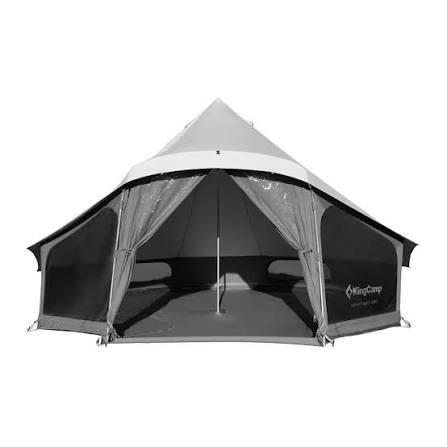
Upgrade your glamping experience with the KingCamp Khan Bell Tent Collection!
Click here to get 12% OFF with code AFFKHAN12
Recent Articles


-
KingCamp Camping Gear: Discounted Tents, Chairs & Camping Equipment
Sep 14, 26 09:35 AM
 Discover KingCamp camping gear for families, including affordable tents, chairs, sleeping gear, and outdoor equipment. Explore budget-friendly options.
 -
Best Campsites in the French Alps
Sep 12, 26 08:28 AM
 Best Campsites in the French Alps! Discover the best campsites in some of the most dramatic, diverse and beautiful landscapes you'll ever camp in!
 -
Our Backpacking Guide Is An Invaluable Resource For Your Next Trip
Sep 12, 26 08:17 AM
Our backpacking guide page gives you all the imformation you need for a successful trip!